The world, in facts — daily.
Independent Global Daily · Established 2025

The Terrible Facts

Wednesday, 28 October 2026Global Edition · Live

Science

Live science, space and environment reporting from BBC, NPR and The Guardian — auto-updated every two minutes.

Live · updated just now · 35 stories
Putin hails Elon Musk’s ‘genius’ amid plans for Russian version of Starlink
Science · The Guardian

Putin hails Elon Musk’s ‘genius’ amid plans for Russian version of Starlink

Russia plans to build own version of US billionaire’s satellite communications to help attack UkraineVladimir Putin praised Elon Musk’s genius and said he was in touch with Starlink’s controlling shareholder as Russia develops its own satellite communications for its military to use against Ukraine.The Russian president, speaking at a summit with African leaders in Moscow, was comparing the Earth-orbiting network built by Musk’s SpaceX with Russia’s gradual efforts to build its own Rassvet constellation. Continue reading...

The Guardian · 2h ago
How rising seas transformed dry land into Venice lagoon
The Guardian

How rising seas transformed dry land into Venice lagoon

Scientists uncover ancient hills and swamps that disappeared as sea levels rose across northern AdriaticVenice is famed for being a floating city, but research shows the land it sits on once lay many miles inland. Dramatic changes in sea level over 10,000 years have reshaped the northern Adriatic coastline, with much of the land that our ancestors roamed now lying beneath the waves.Samuele Ongaro, at the University of Southampton, and colleagues combined seismic data with sedimentary cores from the coastal basins of northern Italy, Slovenia and northern Croatia to model changes in sea level across the region and reconstruct past landscapes over the past 10,000 years. Continue reading...
15h ago
Rare Nanotyrannus skeleton sells for $47.3m at New York auction
The Guardian

Rare Nanotyrannus skeleton sells for $47.3m at New York auction

Sale makes ‘Jodi’, a smaller relative of T rex, the ‘second most valuable dinosaur ever sold at auction’, Sotheby’s saysA rare skeleton of a Nanotyrannus, a smaller relative of the Tyrannosaurus rex, sold at auction in New York this week for $47.3m, making it one of the world’s most expensive fossils.The skeleton, named “Jodi” after the person who found the remains in 2019, sold at Sotheby’s on Tuesday for $47.3m, “after a twelve-minute bidding battle that saw six bidders compete online and over the phones, before ultimately selling on the phone”, Sotheby’s said in a statement. Continue reading...

23h ago
Weather warning lifted as third storm to hit Scotland eases off
BBC

Weather warning lifted as third storm to hit Scotland eases off

Energy provider SSEN says 2,000 properties in the north of Scotland are still without power after days of high winds and heavy rain.

1d ago
Will a new strategy help protect Northern Ireland's nature?
BBC

Will a new strategy help protect Northern Ireland's nature?

About 40% of the plants and animals in protected sites across Northern Ireland fall short of meeting the standard for "favourable condition".

1d ago

More in Science

Auto-refresh · every 2 min
Nanotyrannus skeleton sells for $47.3m in New York auction
BBC · 1d ago

Nanotyrannus skeleton sells for $47.3m in New York auction

The sale of the rare skeleton reignites debate in the scientific community about whether dinosaur remains should end up in private hands or public view.

Tiny zebra-striped bee sighting a 'huge surprise'
BBC · 1d ago

Tiny zebra-striped bee sighting a 'huge surprise'

A zebra-striped bee is seen in Somerset for the first time, offering hope in restored saltmarshes.

Scotland's recycling rates at five-year low. How is your area doing?
BBC · 1d ago

Scotland's recycling rates at five-year low. How is your area doing?

Environmental regulator Sepa says households recycled 42.8% of waste in 2025 - down from 44.3% the previous year.

What's happening to our rubbish?
BBC · 1d ago

What's happening to our rubbish?

As Scotland's recycling rate falls to its lowest level in five years, Kevin Keane looks at what happens to our rubbish.

What is Nasa's Artemis III mission? And what comes next?
BBC · 1d ago

What is Nasa's Artemis III mission? And what comes next?

Artemis III will help test crucial systems needed for the planned Artemis IV Moon landing in 2028.

More high winds hit parts of UK as Storm Boelo clean-up continues
BBC · 1d ago

More high winds hit parts of UK as Storm Boelo clean-up continues

A Met Office weather warning is in place for Scotland and Northern Ireland for much of Tuesday.

Would you pay to have the ‘best baby’? Liberal eugenics and the troubling quest for human perfection
The Guardian · 1d ago

Would you pay to have the ‘best baby’? Liberal eugenics and the troubling quest for human perfection

For decades the idea of eugenics has been taboo. Now it is returning in a new commercial guiseFor a very long time, I dreamed of being cured. I was born in 1981. I learned to walk early enough, but I stumbled and fell more easily than other children. My parents began to worry that something was wrong, that my muscles were weaker than they should be. Eventually, at the age of three, I was diagnosed with a form of spinal muscular atrophy (SMA). In the 1980s, the precise mechanics were not yet understood, but the condition was known to be hereditary, probably linked to a recessive gene. It was also known to be progressive. As I aged, my muscles would not keep pace. At eight, I began to use a wheelchair for longer distances. By the time I was 18, I rarely walked outdoors any more.It is hard to be young and to know that you are growing weaker rather than stronger. I had all the same aspirations that my nondisabled friends did, but I lived in fear of the future in a way they did not. I spent a lot of time thinking about what my life would have been like if I didn’t have SMA. The images in my head were of something like a double: myself, only rid of this one deficit, imprecisely defined, but encoded somewhere in my body. Continue reading...

When an invasive fish is also tasty, Maryland schoolkids can help 'eat the problem'
NPR · 2d ago

When an invasive fish is also tasty, Maryland schoolkids can help 'eat the problem'

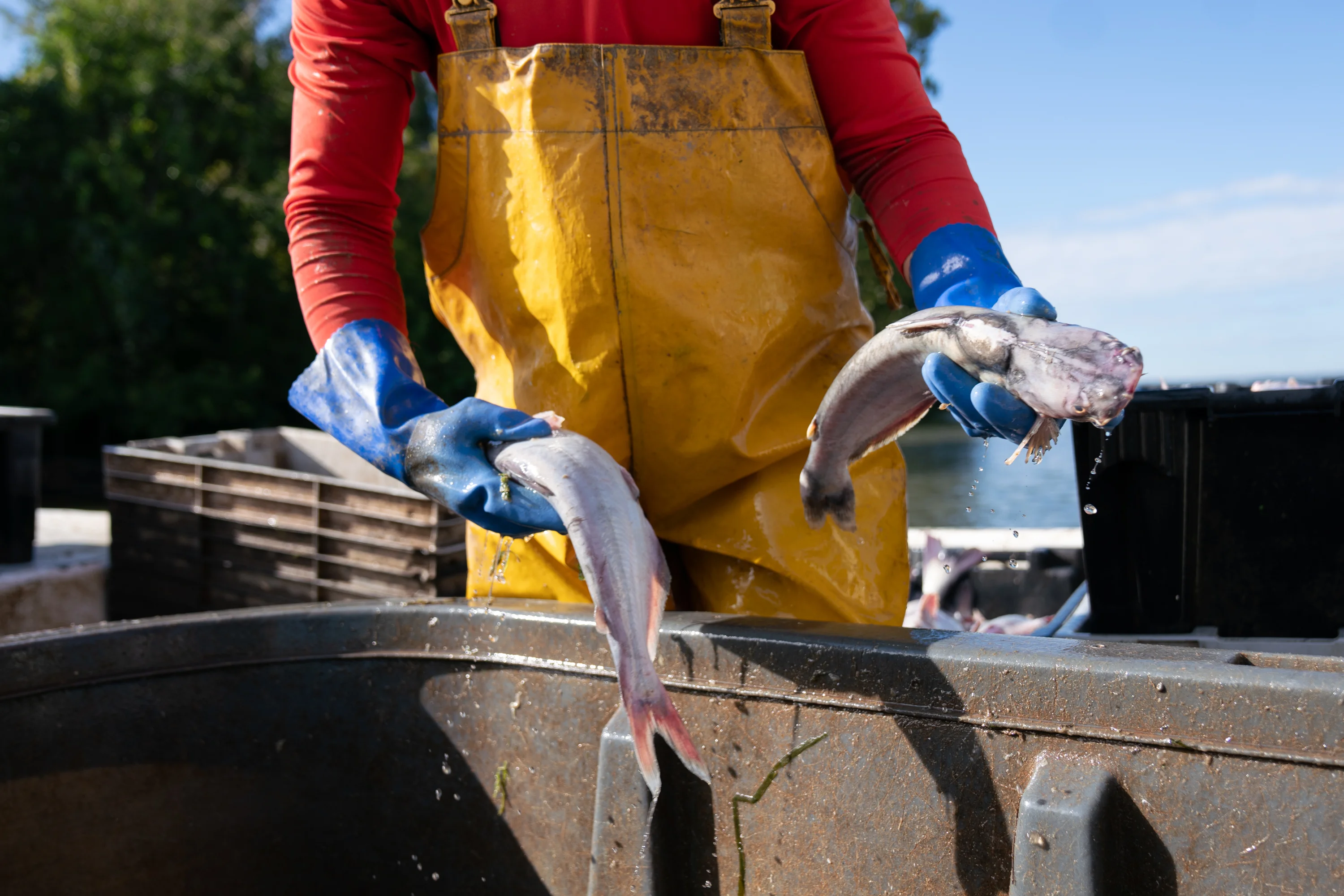
The Chesapeake Bay, home to blue crabs and striped bass, has a new apex predator: the blue catfish. It's invasive and voracious. It's also delicious, which officials hope might help save the bay.

Political battle intensifies within Labour over Rosebank oil field
BBC · 2d ago

Political battle intensifies within Labour over Rosebank oil field

Scottish Labour leader Michael Marra is urging the energy secretary to approve the controversial plans.

'Safety first' as wedding guests stranded on island after Storm Boelo
BBC · 2d ago

'Safety first' as wedding guests stranded on island after Storm Boelo

Wedding guests at an island in County Fermanagh were left stranded due to the storm.

Part of Antarctica named after former BBC science correspondent
BBC · 2d ago

Part of Antarctica named after former BBC science correspondent

A stretch of water in the west of the continent is now called the Amos Channel after the ex-BBC journalist.

‘Maxxing’ is Dictionary.com’s word of the year: ‘It’s cooler than saying you’re doing more’
The Guardian · 2d ago

‘Maxxing’ is Dictionary.com’s word of the year: ‘It’s cooler than saying you’re doing more’

As all facets of our lives are optimized, the suffix has become inescapable - and experts predict it’s around to stayMaxxing is not a new concept. Dungeons and Dragons players have been “min-maxing” character stats for years; Will Smith was maxin’ and relaxin’ in the 90s; as far back as the 40s, the term was used in game theory.But in the past few years, as all facets of our lives are optimized, the suffix has become inescapable. We’re personalitymaxxing to charm our peers and sleepmaxxing to get the best possible rest; the Pentagon brags about “lethalitymaxxing”. Continue reading...

Even more

About Science on The Terrible Facts

Every science story on this page is aggregated live from trusted global newsrooms including BBC, NPR, The Guardian, Al Jazeera, WIRED, TechCrunch, ESPN and more. Headlines refresh automatically every two minutes, so what you see here is always the current picture — no staleness, no manual curation delay.